At Cargo Dynamic, we're dialled in. Our clients depend on us not only to move cargo, but to interpret sentiment, anticipate shifts, and chart the safest, most efficient route through changing conditions. With the market in a delicate state of adjustment, that intelligence is more critical than ever.
A Divided Market: Two Speeds, One Uncertain Future
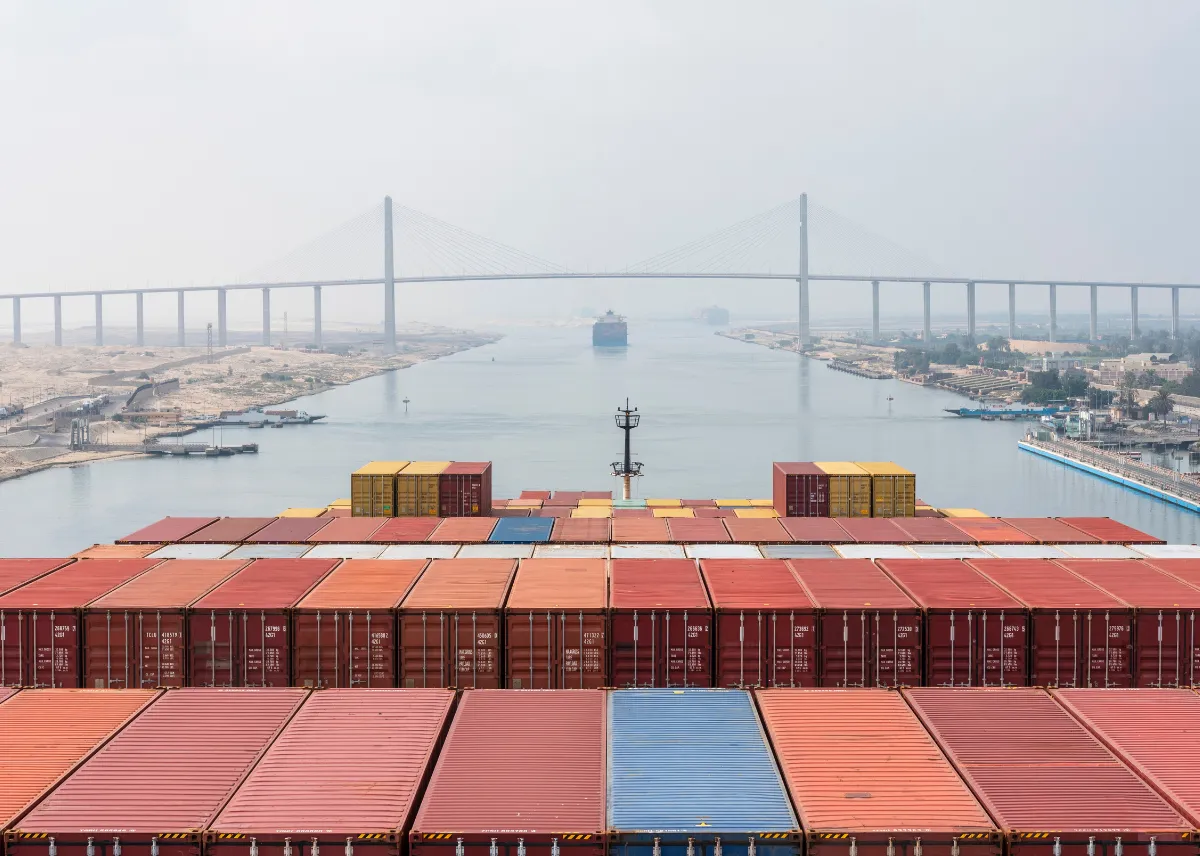
Carrier behaviour currently sits on a spectrum, with some lines taking tentative steps back into the Red Sea, while others remain firmly committed to Cape of Good Hope routing.
Caution Still Dominates Among Key Carriers
Some central lines have publicly stated a conservative stance on a full return to Suez routings, reflecting ongoing concerns about security risks, escalated insurance premiums, and exposure for ultra-large container vessels. Extended transit times remain the reality across many services, and schedule reliability is improving only slowly, a key consideration for time-critical or highly coordinated project movements.
Controlled Re-entry From Others
Other carriers have begun limited, carefully managed transits through the corridor. While operations remain cautious and scaled back, these movements are meaningful: they indicate a testing of conditions and a close watch on insurance and maritime security readiness.
Industry Sentiment: Guarded Optimism, Not Full Confidence
Despite positive signals, the broader sentiment across global shipping is one of cautious optimism. Maritime risk specialists continue to warn that threats in the region are suppressed rather than eliminated. Premiums for vessels entering the corridor remain high, equipment repositioning is uneven, and many carriers are unwilling to expose high-value assets to unpredictable conditions. The result is a highly fractured reopening, with each carrier advancing on its own timeline, strategy, and appetite for risk.
The Impact on Global Supply Chains
With routing decisions diverging between carriers, the supply chain ripple effect is already visible across key trade lanes.
1. Transit Times Are Unpredictable
Some services are shortening as select carriers reintroduce Suez routings. Others remain via the Cape of Good Hope, adding 10–15 days to east–west cycles. This disparity creates a highly uneven landscape for ETAs and schedule planning.
2. Rates Are Volatile
As capacity shifts between corridors, rate movements are becoming more frequent. Spikes, dips, and temporary adjustments will likely continue until the market finds equilibrium.
3. Operational Disruptions Haven't Vanished
Port omissions, blank sailings, delayed rotations, and berth congestion, especially in Asian hubs, persist, largely due to the long-term strain caused by Red Sea diversions.
4. Insurance Costs Continue to Complicate Return Plans
War-risk premiums and additional security surcharges are still significant drivers in carrier decision-making. Until these are reduced, large-scale reinstatement of Suez routings is unlikely. For project cargo, particularly heavy lift, OOG, and breakbulk, these dynamics have an outsized impact due to limited sailing frequency and specialised equipment requirements.
How Cargo Dynamic Is Navigating This Moment for Clients
This is precisely where we come into our own. Project logistics requires more than simply booking space; it demands intelligence, scrutiny, scenario planning, and unwavering attention to detail. That’s our DNA.
1. Route-By-Route, Carrier-by-Carrier Analysis
We track each carrier’s operational stance, safety restrictions, frequency, and real-world transit performance to model accurate lead times and advise clients on the safest, most efficient routing for their cargo profile.
2. Built-In Risk Management
Every move we plan includes risk mapping, mitigation strategies, and contingency options:
- alternative routings
- transhipment avoidance
- multimodal combinations
- secure stowage and handling procedures
- insurance considerations
- geopolitical assessments
3. Multimodal Flexibility When the Sea Lane Tightens
When ocean schedules are disrupted or extended, we integrate air and road solutions to maintain critical path timelines. That flexibility is often the difference between a project staying on schedule or slipping.
4. Real-Time Visibility
Our digital platform provides clients with complete transparency into location, status, exceptions, and real-time updates. No guesswork, no radio silence.
5. Proactive, Predictive Communication
We notify clients of developing risks in advance, not after they become problems. In volatile conditions, information is as valuable as freight space.
What This Means for Your Upcoming Projects
If your business has significant movements in the pipeline, especially OOG, HL, or time-sensitive cargo, now is the moment to sharpen your logistics planning.
- Build more buffer into project timelines than you would under normal conditions.
- Secure equipment and space earlier, especially for specialised cargo.
- Remain open to flexible routings, as carrier positions may evolve unexpectedly.
- Use multimodal strategies to protect critical path deadlines.
- Let us benchmark carrier performance weekly, not monthly; this market changes fast.
Final Word
The Red Sea and Suez Canal picture is improving, cautiously, unevenly, and with close supervision from every corner of the industry. While several carriers are testing the waters, a full-scale return is far from guaranteed. For now, the smart move is to stay nimble, stay informed, and stay partnered with a logistics provider who reads the market as closely as it moves cargo.