Learn how Cargo Dynamic provide the logistics solutions for your project.
Whether oversized cargo, heavy-lift operations, or multimodal transport, we ensure a seamless and cost-effective experience.

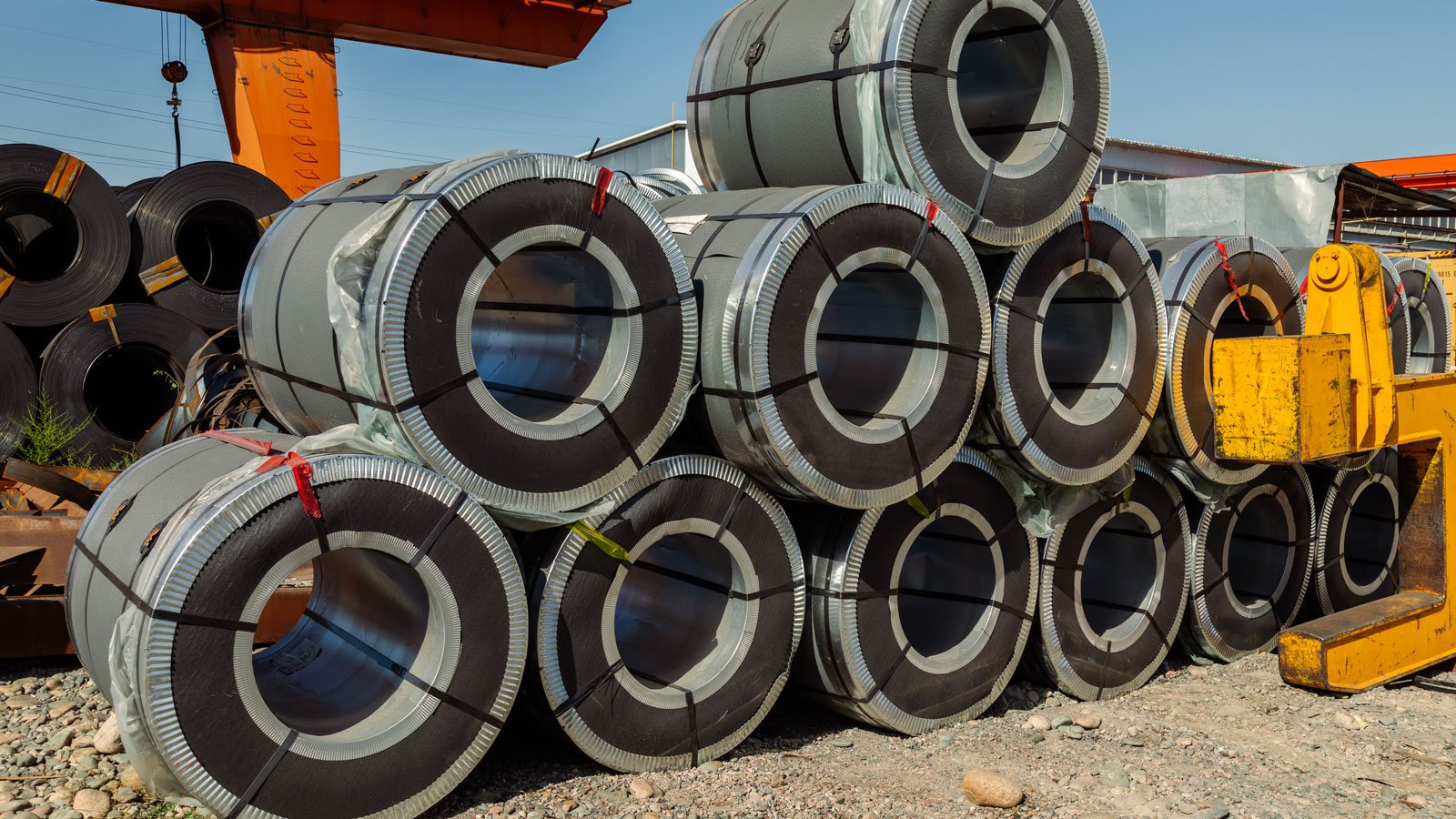
Steel coils are a specialised and challenging type of cargo due to their immense weight, high density, and cylindrical shape.
As fundamental components for major industries like automotive, construction, and manufacturing, their safe and timely delivery is economically vital. However, their physical properties, especially their tendency to roll, make them uniquely challenging to transport securely.
The primary danger in transporting steel coils stems from their mass and shape. A key concept is the "rolling pin effect": if a coil breaks free from its restraints, it can start to roll, accumulating immense kinetic energy and becoming a highly destructive force.
"Once the mass starts to move and roll, there is no stopping it, and the coil will leave a trail of devastation."
This uncontrolled force can breach standard container walls, which are not designed for such concentrated impacts, leading to catastrophic accidents. These can include vehicle rollovers, loss of cargo, and significant damage to infrastructure. The potential for serious injury or fatality is a grave concern, underscoring why strict adherence to securing guidelines is non-negotiable.
All cargo is subjected to dynamic forces during transport, including acceleration, braking, turning, and rolling.
A securing plan must be robust enough to resist the combined effect of all anticipated forces for the specific mode of transport.
Two core principles guide all effective cargo securing practices:
Adhering to these principles is a critical safety imperative that protects the cargo, the transport unit, and public safety.
Selecting the correct container is a critical first step.
A container's floor is often its most vulnerable component. It typically consists of plywood sheets screwed onto steel cross-members. The plywood between these supports has limited strength. A container's maximum payload rating assumes the weight is distributed evenly, which is not the case with steel coils that concentrate their entire mass on a small footprint.
The ISO 668 standard provides guidelines for maximum loads per linear meter of container length. Shippers must know both ISO standards and any specific carrier requirements.
| Container Type | Standard Max Load (ISO 668) | Example Carrier-Specific Max Load (for Coils) |
|---|---|---|
| 20ft Container | 4.5 tonnes / linear meter | 5.0 tonnes / linear meter |
| 40ft Container | 3.0 tonnes / linear meter | Not specified for coils |
| Note: | Always verify specific carrier allowances. | |
A non-negotiable rule is that the steel coil must have NO CONTACT WITH THE FLOOR of the container. Placing a coil directly on the plywood floor will almost certainly cause damage.
A support system, such as timber or steel beams, is mandatory to bridge multiple floor cross-members and distribute the load. For heavy coils placed with their axis running lengthwise ("Eye Fore and Aft"), heavy-duty cradles made of wood or steel are required to support the weight and prevent rolling.
Personnel must ensure the load does not exceed the floor's limits. A practical method to determine the required support is:
The coil rests on a flat face. Small coils can be placed close together and bound with steel straps. If on pallets, the coils must not protrude and must be secured to the pallet, which is then secured to the container.
The coil rests on its curved surface with its axis across the container's width. Coils must be distributed to keep the cargo's center of gravity in the middle of the container. This orientation requires extensive blocking and lashing to prevent rolling.
The coil rests on its curved surface with its axis along the container's length. Heavy steel coils in this orientation must be packed on heavy-duty cradles to prevent rolling and distribute the load.
| Orientation | Key Support | Primary Risk | Securing Focus |
|---|---|---|---|
| Eye to Sky | Pallet / Flat Dunnage | Tipping / Sliding | Blocking & Lashing to Rings |
| Eye to Side | Longitudinal Beams / Chocks | Rolling | Transverse Lashing & Blocking |
| Eye Fore and Aft | Heavy-Duty Cradle | Rolling / Sliding | Securing the cradle structure |
Two critical rules apply to securing materials:
Always inspect lashing points for damage or corrosion and use certified products (e.g., CTU Code Compliant) where possible.
When a forklift operates inside a container, its concentrated wheel loads can damage the floor. ISO standard 1496/1 specifies limits to prevent this.
| Parameter | Limit |
|---|---|
| Max Front Axle Weight (Forklift + Load) | 5,460 kg |
| Min. Tire Contact Surface (per tire) | 142 cm² |
| Min. Tire Width | 18 cm |
| Min. Distance Between Wheel Centres | 76 cm |
Understanding what not to do is as important as knowing the correct methods. Common mistakes include:
The consequences are severe, often resulting in cracked floorboards and bent cross-members, leading to costly repairs. For example, replacing multiple cross-members and floor sections can easily cost over £1,000.
The shipper is ultimately responsible for the correct and safe loading of their cargo. Contracts typically require the shipper to indemnify the carrier for all damages, including: fully
The potential financial repercussions are enormous, making proper securing a critical risk management function.
The safe transport of steel coils demands meticulous planning and execution. The following control points are critical:
A detailed loading plan developed by knowledgeable personnel and continuous training for all staff are essential. Prioritising safety and compliance is an investment that protects assets, personnel, and the public.



Whether oversized cargo, heavy-lift operations, or multimodal transport, we ensure a seamless and cost-effective experience.

Cargo Dynamic Ltd
Earl Business Centre
Earl Mill, Dowry St
Oldham, OL8 2PF
Tel: 0161 399 5708
email: info@cargodynamic.co.uk